Audience research
Welsh and English search behaviour in Cardiff, a keyword research overview
Bilingual keyword research Cardiff means mapping English and Welsh demand separately, then structuring pages so they never duplicate each other.
What to take away
- Bilingual keyword research Cardiff starts with splitting English and Welsh demand before you build anything.
- Welsh-language search terms are shorter and more literal than their English equivalents, and volume data is thin.
- Hreflang plus a clear URL pattern keeps the two language versions from competing.
- Welsh-language performance needs its own reporting view, separate from English totals.
A Cardiff bilingual keyword research checklist
Use this before you commission any Welsh content.
- Confirm the topic has genuine Welsh-language demand, not just an official translation.
- Check that the Welsh query is used by speakers, not only by institutions.
- Assign one canonical URL per language version.
- Apply hreflang between the two versions and verify it in Search Console.
- Set up a separate reporting view for Welsh URLs.
- Record the Welsh target query in the same keyword map as the English one.
Then run the build in order.
Cardiff bilingual keyword research checklist
- Collect English and Welsh queries separately, using different sources for each.
- Group them into topics and mark which topics have real Welsh demand.
- Choose the URL pattern and apply it site-wide before publishing anything.
- Write the Welsh page from Welsh sources, not from a translation of the English page.
- Publish, then check hreflang and canonicals in Search Console within a week.
How English and Welsh search demand differ in Cardiff
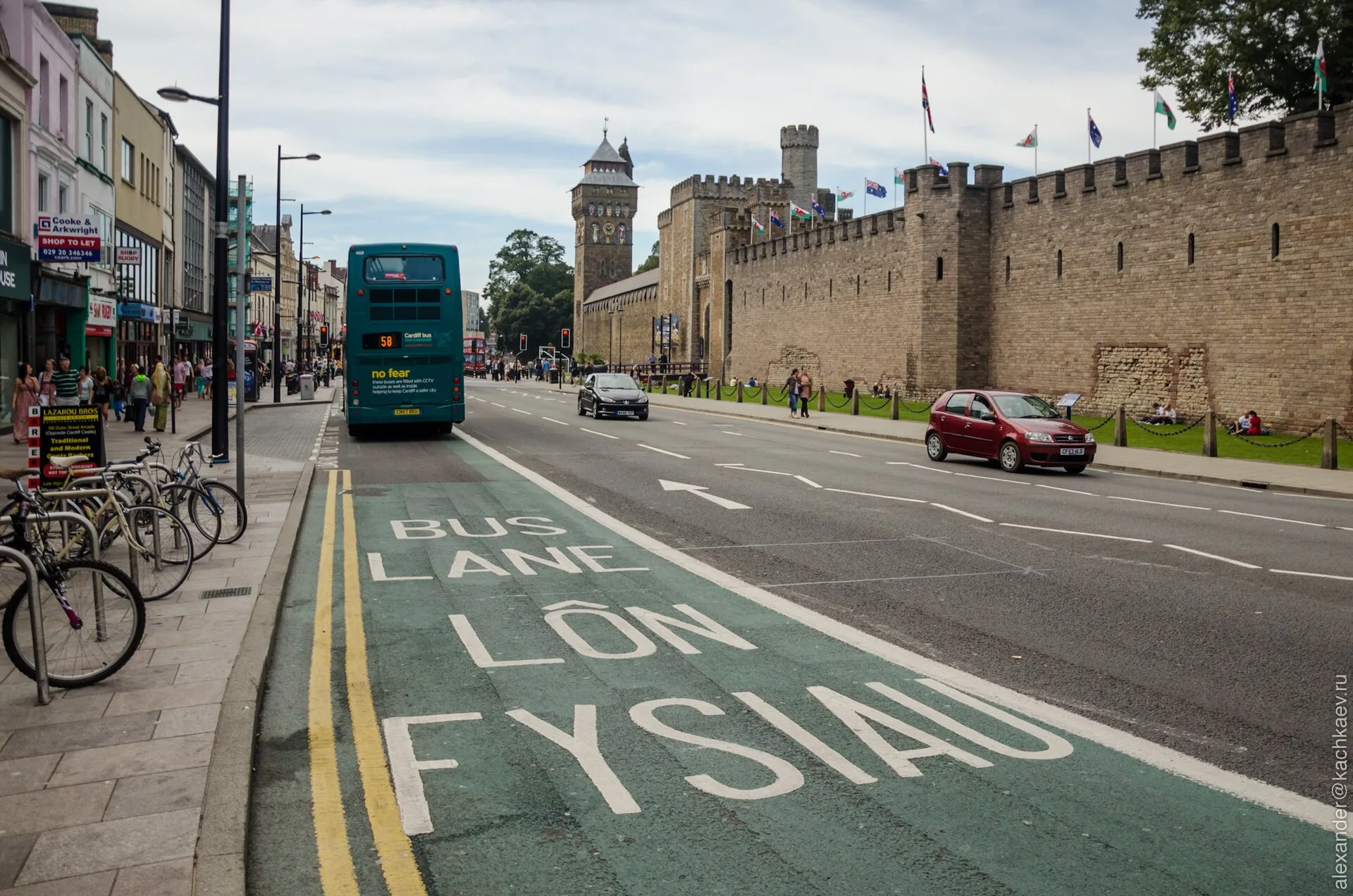
Cardiff is the Welsh capital, and about one in eight of its residents speak Welsh (12.2 percent in Census 2021, against 17.8 percent of people aged three and over across Wales). That is below the Welsh average, so English queries outnumber Welsh ones many times over. Search demand follows the population, not the signage.
English vs Welsh Search Demand
English queries
- Volume
- Thousands monthly
- Intent
- Broad, commercial
- Phrasing
- Varied, location-qualified
- Data quality
- Precise estimates
Welsh queries
- Volume
- Few dozen
- Intent
- Narrow, community
- Phrasing
- Predictable, tight
- Data quality
- Ranges or blanks
English queries in Cardiff look like queries anywhere in the UK: broad, commercial and often location-qualified. Welsh queries cluster around public services, education, culture and community life. The intent is narrower and the phrasing is more predictable.
This split matters because a single keyword list will mislead you. A term with thousands of monthly English searches may have a few dozen in Welsh. That does not make it worthless. It makes it a different job.
Keyword Planner volume estimates for Welsh-language terms often come back as ranges or blanks, because the sample is too small to report precisely. Treat those numbers as direction, not measurement.
As an illustration, the Welsh query 'ysgolion Cymraeg Caerdydd' may show only a low range or a blank in Keyword Planner, while the English equivalent 'Welsh schools Cardiff' usually shows a much higher band. Check both in your own account, because the figures vary by month.
If you are building a picture of who is actually searching, start with the target audience from search data rather than assuming the Welsh-speaking audience mirrors the English one. It does not, and the difference shows up fastest in long-tail queries.
Which Welsh-language terms speakers actually search
Welsh speakers search in Welsh when the thing they want is normally done in Welsh. They search in English when it is not. Council services, school admissions, Welsh-medium childcare and cultural events pull Welsh queries. Consumer retail and travel rarely do.
When Welsh Speakers Search in Welsh
Search in Welsh
- Council services
- Welsh
- School admissions
- Welsh
- Welsh-medium childcare
- Welsh
- Cultural events
- Welsh
- Consumer retail
- English
- Travel
- English
Search in English
- Council services
- English
- School admissions
- English
- Welsh-medium childcare
- English
- Cultural events
- English
- Consumer retail
- English
- Travel
- English
Some terms are near-universal in Welsh usage. Others are translated in official documents but never spoken. The gap between the two is where most bilingual keyword lists go wrong.
Take Cardiff Council school admissions. The English keyword set is broad: school admissions, primary school places, apply for a school place. The Welsh set is tight: 'derbyniadau ysgol Caerdydd', 'ymrestru ysgol Caerdydd' and 'ysgolion Cymraeg Caerdydd'. The Welsh page should target that narrow cluster and nothing more.
Do not translate your English keyword list word for word. Welsh word order and mutation change the string, and literal translations often produce phrases no one types. Build the Welsh list from Welsh sources instead.
Useful sources include BBC Cymru Fyw and Golwg360, Cardiff Council's Welsh-language pages, Senedd Cymru's bilingual pages, and the Welsh Government's terminology portal TermCymru. Search those pages for the phrases that recur. Those are the phrases people recognise.
Before you write, read the W3C Web Accessibility Initiative's resources for content writers, which cover plain headings, link text and clear wording that suit both language versions.
Bilingual keyword sets without duplicating pages
The duplication avoidance method is simple to state and easy to get wrong: one page per language per topic, never one page per keyword per language. Two pages targeting the same intent in the same language will compete. That is true in English and it is true in Welsh.
Separate Welsh Page or Section?
Does the topic have genuine Welsh-language demand?
One Welsh page, one English page
Welsh summary section on English page
Start by grouping queries into topics, not keywords. A topic is a job the searcher wants done. Each topic gets one English page and, if Welsh demand exists, one Welsh page.
Where Welsh demand is too thin for a full page, do not create a stub. Add a Welsh summary section to the English page and mark it up properly. A thin Welsh page with three sentences does more harm than a good bilingual section.
You can borrow structure from an audience research guide when you are deciding which topics justify a separate Welsh page. The test is whether Welsh speakers would search for that job in Welsh at all.
Keep a single keyword map for both languages. List the topic, the English target query, the Welsh target query, the URL for each, and the canonical. If two rows point at the same URL and the same language, you have a duplication problem.
Hreflang, URL structure and canonical choices
Hreflang is the standard way to tell search engines that two pages are language variants of the same content. It is not a ranking factor on its own. It is a disambiguation tool, and it only works if the URLs are stable.
Hreflang and Canonical Rules
Do
- URL pattern
- One pattern site-wide
- Canonical
- Self-referencing per language
- Hreflang
- Between language variants
- Stability
- Stable URLs
Do not
- URL pattern
- Mixed patterns
- Canonical
- Welsh points to English
- Hreflang
- As a ranking factor
- Stability
- Changing URLs
Use a clear URL pattern. Either a subdirectory per language, or a country and language subfolder, applied consistently. Do not mix patterns across the site, because that is how hreflang errors start.
Each language version is canonical to itself. Do not point the Welsh page's canonical at the English page. That tells search engines the Welsh page is a duplicate, and it will be dropped.
Google Search Central's documentation on localised versions of a page covers the mechanics of hreflang and canonical tags. Read it before you hand the job to a developer, because the common mistakes are structural, not editorial.
The England market guide covers structural decisions in a single-language market.
Measuring Welsh-language performance separately
If you report Welsh pages inside your English totals, you will never know whether they work. Separate the two from day one.
Welsh Performance Metrics to Track
- 20impressions a month can be valuable
- 3metrics per language
- Quarterlyreview cycle
Search Console query reporting is how you compare English and Welsh performance. Set up a filter or a separate property view for Welsh URLs, and check the queries report for Welsh-language strings. They will be a small share of impressions and a very different click-through pattern.
Expect low impressions and high intent. A Welsh query with twenty impressions a month can still be the most valuable query on the site if it comes from someone looking for a Welsh-medium service.
Track three things per language: impressions, clicks and the share of queries you did not anticipate. The third is the most useful. Unanticipated Welsh queries tell you which terms real speakers use.
Review quarterly. Welsh search behaviour shifts with policy and with school terms, and a list built in one season can be stale by the next.
Cardiff Bilingual Keyword Checklist
- Confirm genuine Welsh-language demand, not translation
- Check the Welsh query is used by speakers
- Decide separate Welsh page or section
- Assign one canonical URL per language
- Apply hreflang and verify in Search Console
- Set up separate reporting view for Welsh URLs
- Record Welsh target query in the keyword map
One last point on competition. Welsh-language SERPs are thin, so a well-built Welsh page can rank quickly. That is an opportunity, and it is also why you should treat competitor research with care: the English SERP for the same topic tells you nothing about the Welsh one.